How to Build Service Pages That Rank and Convert for Professional Firms
 Kyle Headland |
23 January, 2026 |
5 minute read |
Blog, Content Creation
Kyle Headland |
23 January, 2026 |
5 minute read |
Blog, Content Creation
Are you struggling to see results from your service pages? We’ve laid out a practical framework to turn service pages into lead filters—allowing you to attract the right intent, prove credibility fast, and convert without feeling “salesy”.
To build a service page that ranks and converts, align content to one primary search intent, layer trust signals where doubt occurs, and use conversion architecture that guides users to the next step without friction. The goal isn’t more leads, it’s better leads.
This piece is perfect for B2B specialists with service pages that need to rank as well as pre-qualify.
The reason most service pages fail is because they follow these three pitfalls:
- Target vague keywords like “consulting services” instead of intent-led queries
- “Say” credibility instead of showing it
- Hide the CTA or ask for too much too early
Whereas a great service page filters as much as it sells: higher quality inbound leads.
What makes a service page “rank and convert” for professional firms?
- Search intent: the job the user wants done when they search
- Trust signals: proof that reduces perceived risk
- Conversion architecture: how the page moves users from interest, to confidence, to action
If you’re creating pages without trust you will inevitably see low quality leads and if you create trust pages with no intent you will see no traffic.
Step 1 – Nail the search intent
Choose one primary intent per page
Your page needs to show clear intent that it is either trying to solve a problem, compare a service or be sector specific. If you try and rank for everything you will rank for nothing.
Copy/Paste Template For An Intent Map
(For a deeper breakdown, see keyword mapping.)
- Primary query: ______
- 3–6 supporting queries: ______
- Audience/sector: ______
- Decision stage: early / mid / late
- What “proof” would they need?: ______
- What disqualifies a bad fit lead?: ______
Match intent to page content
- “Paid Search Consultancy” > outcomes + proof + process + CTA above the fold
- “Google Ads vs. Facebook Ads” > comparison table + FAQs + case studies
- “PPC for manufacturers” > sector proof + tailored outcomes + compliance cues
Step 2 – Add trust signals where doubt happens
The trust placement rule
Put the trust next to the claim, before the ask. This is crucial to let your visitors know that you are a trusted source.
Trust signals professional firms should prioritise
Case Studies
Use case studies with outcomes that show the problem (in the client’s words), the approach you took to fix this, and the results achieved.
Testimonials
Reviews from relevant clients that prove you are the right choice for the service they are looking for.
Accreditations
Showing your prospective clients that you have the recognition in place that makes you a leader in your field will help to build trust.
Client Logos
Client logos of similar businesses you have worked with reaffirms that you know what you are doing.
Clear Intent
Do you make it clear on the page who you are speaking to (sector, problem, outcome)?
Process Transparency
Process transparency helps the visitor understand the service you provide, timelines they can expect, and deliverables.
Step 3 – Build Conversion Architecture
Use the 3-CTA system
The three call-to-action system will act as your lead quality lever and allow you to catch different levels of intent.
- Primary (high intent): Book a consultation / Request proposal
- Secondary (mid intent): View case studies / Download guide
- Micro (low intent): Review FAQs / See pricing
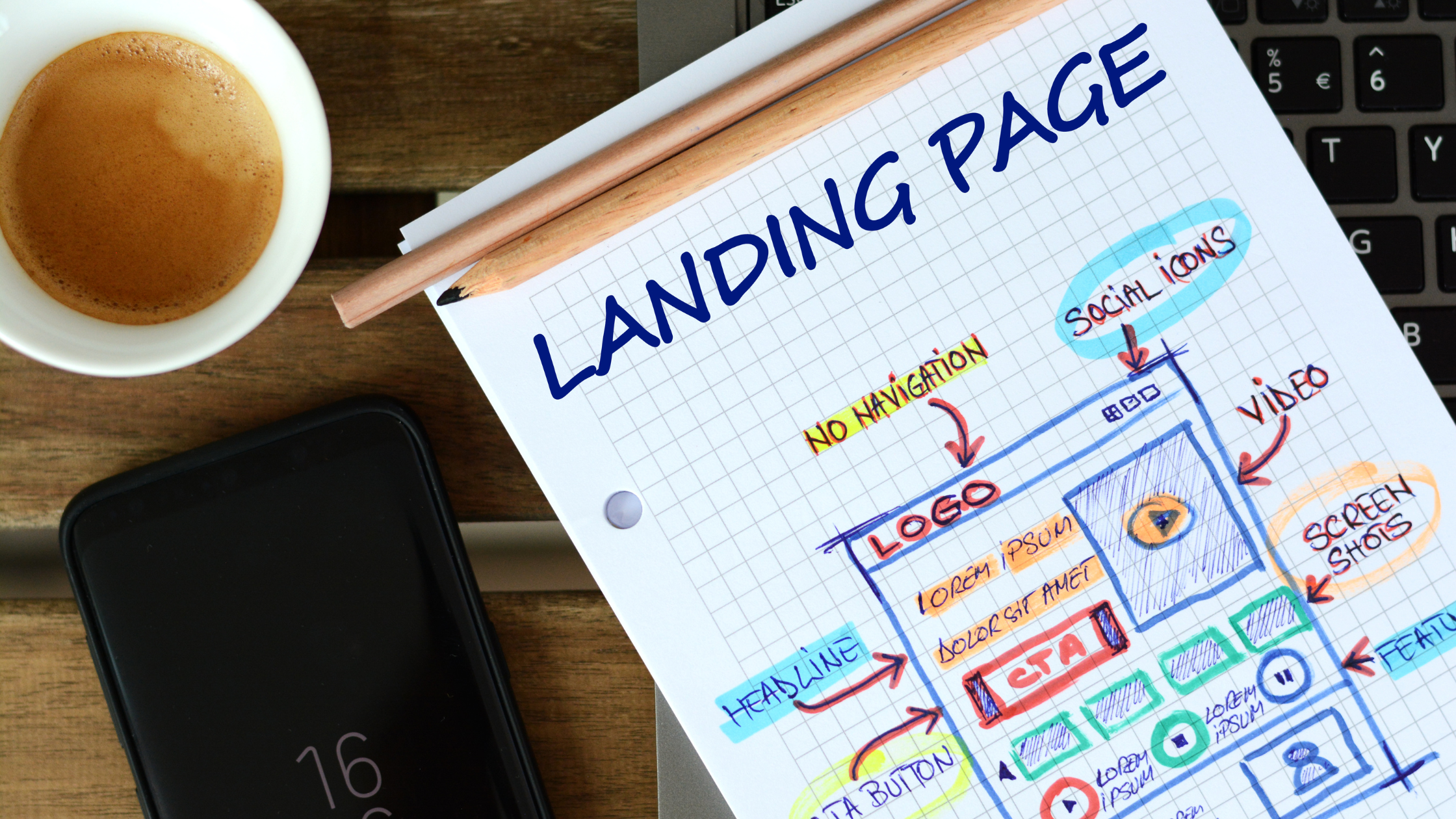
Above-the-fold wireframe
For a practical CRO-style framework, see the PPC landing page optimisation checklist.
- Headline: use an outcome-led headline that states the result (not “we do X”).
- Audience + pain: specify who it’s for and the exact problem solved.
- Proof strip: add credibility immediately with client logos, measurable results, or accreditations.
- Calls to action: include one primary CTA (book a call / request a proposal) and one alternative CTA (view case studies / download a guide).
- How it works: summarise the process in three steps so users understand what happens next.
Quick Checklist To Build Service Pages That Rank And Convert For B2Bs
- One primary intent per page
- Proof placed above the fold
- Trust near claims and objections
- 3-CTA system (high/mid/low intent)
- “For / not for” qualification section
- Clear process + deliverables + timelines
- Fast page UX: scannable headings, short paragraphs, internal links
Build service pages that rank and convert by aligning each page to one primary search intent, then matching the content to that intent.
Final Thoughts
- Create service pages that rank and convert by targeting one primary search intent and matching the page to that intent.
- Add trust signals where doubt happens (case studies, testimonials, accreditations, relevant logos, clear process).
- Use conversion architecture with a 3-CTA system and a clear above-the-fold flow (outcome headline, audience + pain, proof, CTAs, 3 steps).
- Avoid vague keywords, unproven claims, and hidden or high-friction CTAs.
- Result: higher-quality inbound leads, not just more leads.