
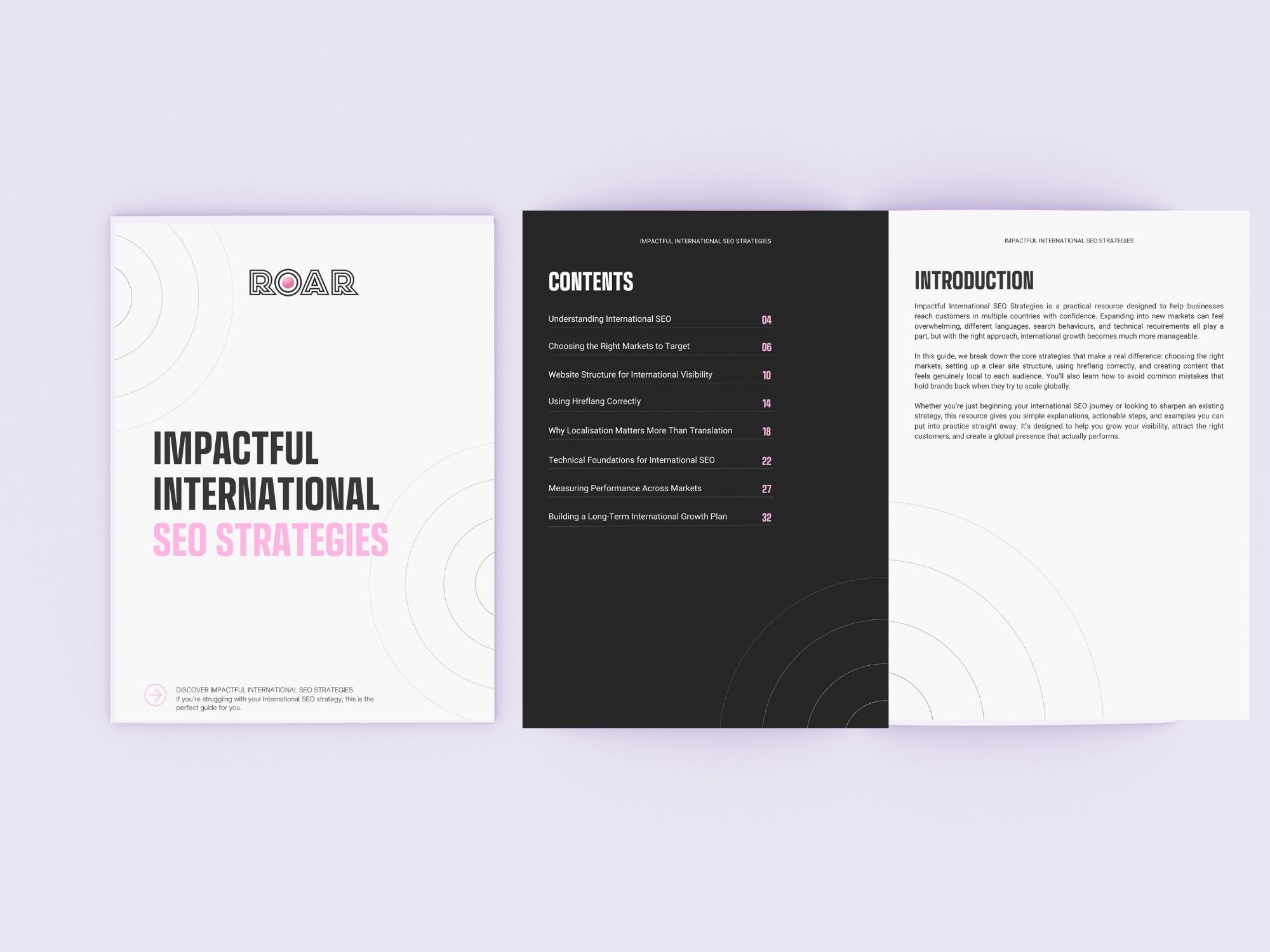
Impactful International SEO Strategies
Struggling to get your International SEO right? You’re not alone. Expanding into new countries can be challenging; different languages, search habits, and technical setups all add complexity. But with a clear strategy, growing globally becomes far easier.
In this guide, we walk you through the essentials of successful International SEO: how to choose the right markets, structure your website, use hreflang properly, and create content that truly connects with local audiences. You’ll also learn the common pitfalls to avoid so your brand can scale confidently across borders.
Top Considerations
When planning your international SEO strategy, start by understanding which markets offer the best opportunity, not just based on search volume, but on demand, competition, and your ability to serve those customers. From there, choose the right website structure (ccTLDs, subdomains, or subdirectories) to support long-term scalability.
Accurate hreflang implementation is essential to guide search engines to the correct regional content and avoid duplicate content issues. Also, it is important to focus on true localisation, not just translation, by adapting messaging, cultural references, user behaviour insights, and in-market keywords to create meaningful connections with each audience.
Frequently Asked Questions
Why is international SEO important?
It ensures the right users in each country see the right version of your content, improving visibility and conversions.
How do I target customers in different countries?
Use hreflang tags, country-specific content, and geo-targeted keyword research.
Do I need separate websites for each country?
Not always, you can use subdirectories, subdomains, or country-code domains, depending on your budget and goals.
How do I target customers in different countries?
Use hreflang tags, country-specific content, and geo-targeted keyword research.
Download Resource
"*" indicates required fields