
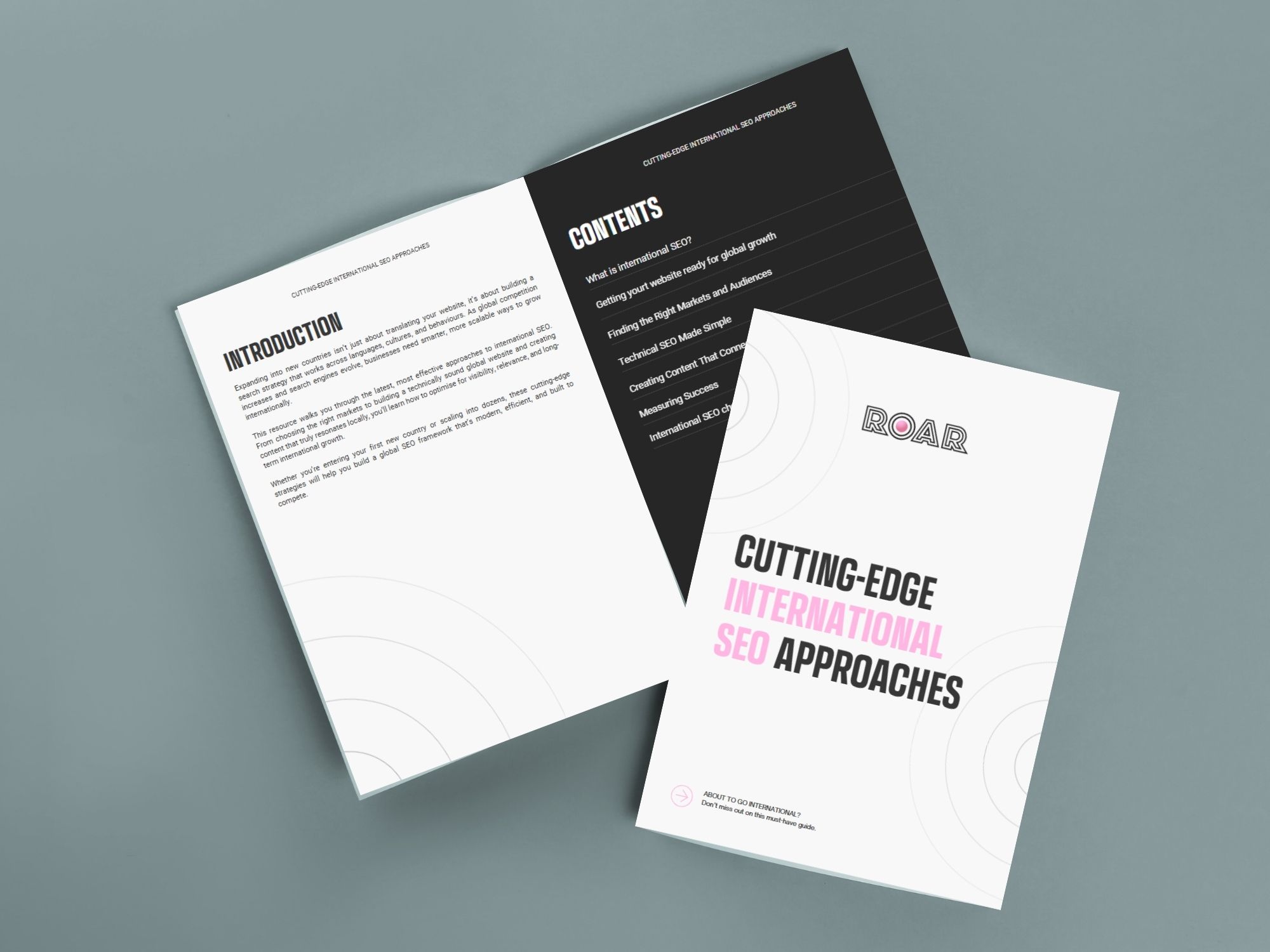
Cutting-Edge International SEO Approaches
Expanding into new global markets and want to scale your organic visibility without wasting budget or repeating mistakes country by country? You’re in the right place.
International SEO is far more than translations and hreflang tags. Entering new regions requires technical precision, cultural nuance, and a scalable site architecture that keeps your global content aligned while letting each market perform at its best.
This resource outlines the core principles of high-performing international SEO and why cutting corners almost always leads to cannibalisation, indexing issues, or stagnant international growth. For the full playbook (including setup frameworks, implementation checklists, and localisation workflows), download the complete guide below.
Top Mistakes Businesses Make With International SEO
Using direct translation instead of market-led localisation
What works in one country often misses the mark in another. User intent shifts, sometimes dramatically.
Incorrect or inconsistent hreflang implementation
A single mis-tag can cause Google to serve the wrong version and tank your visibility in key regions.
Launching multiple domains without a cohesive global strategy
ccTLDs, subfolders, and subdomains each have trade-offs. Choosing the wrong structure can slow expansion for years.
Duplicate content across regions
If search engines see your pages as identical, they’ll pick a favourite, and it may not be the one you want.
Frequently Asked Questions
How long does international SEO take to show results?
Most businesses see traction within 2–3 months, but full market maturity can take 6–12 months depending on competitiveness and content depth.
Do I need separate websites for each country?
Not always. The best structure (ccTLDs, subfolders, or subdomains) depends on your brand authority, content volume, and long-term global strategy. The guide breaks down each option with pros and cons.
What’s the difference between translation and localisation?
Translation converts language. Localisation adapts intent, culture, phrasing, and keywords, which is what drives rankings and conversions.
Download Resource
"*" indicates required fields