
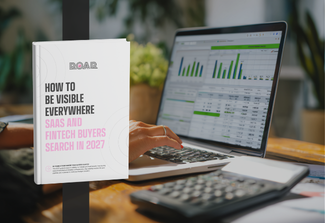
How to be Visible Everywhere SaaS and Fintech Buyers Search in 2027
Your buyers build their shortlist from Google, AI answers and review sites before they ever fill in a demo form. This free guide shows you where you’re visible today, where you’re missing, and how to plan your 2027 budget around the gaps.
Search has changed faster than most budgets. A finance director reads an AI Overview. A CTO asks ChatGPT for a shortlist. An ops lead checks G2 before anyone books a demo. If your product isn’t seen during that research, it’s unlikely to make the list.
This guide is built for marketing, growth and revenue teams at SaaS and fintech companies who are setting their 2027 budgets now and want to put spend where it closes real gaps.
What’s inside
- How buyers search now. The five stages of a B2B software purchase, who’s searching at each one, and where they look.
- What visibility means in 2027. Being found in Google, featured in AI Overviews and recommended by ChatGPT, Copilot, Gemini and Perplexity.
- A visibility scorecard. Score yourself and your closest competitor across eight places buyers search, using free tools.
- Where to start. Practical first steps for SEO, AEO and PPC, including fintech-specific rules on financial content and ad verification.
- A 2027 budget planner. Split spend by gap, pick your stance (Build, Grow or Defend) and agree how you’ll measure success before the year starts.
Who it’s for
Heads of marketing, growth leads, CMOs and RevOps teams at SaaS and fintech companies, particularly those selling to buying committees in the UK.
FAQs
Who is this guide for?
Marketing, growth and revenue leaders at SaaS and fintech companies who are planning their 2027 search budget. It’s written with UK buyers and UK regulation in mind, but most of it applies to any B2B software brand.
What’s the difference between SEO and AEO?
SEO (search engine optimisation) helps your website appear in Google’s results, including AI Overviews and AI Mode. AEO (answer engine optimisation) helps AI assistants such as ChatGPT, Microsoft Copilot, Gemini and Perplexity understand your product and recommend it when buyers ask which tool to use.
We already rank well in Google. Do we need AEO?
Possibly. Ranking well in Google doesn’t guarantee AI assistants will name you. They build their answers from review sites, roundups and third-party mentions as well as your website. The scorecard in the guide shows whether there’s a gap.
Do I need paid tools to use the scorecard?
No. You need Google Search Console, which is free, and access to the AI assistants your buyers use. The guide recommends checking in a private or logged-out window so your own history doesn’t affect the results.
Does the guide tell me how much to spend?
It helps you decide where to spend, based on your weakest areas. It doesn’t set figures, because the right budget depends on your category, competitors and goals. If you’d like help putting numbers against each line, book a discovery call.
Is the guide relevant for fintech specifically?
Yes. It covers fintech-specific points such as showing FCA authorisation and security certifications, Google’s higher standard for financial content, and the verification Google requires before UK financial services ads can run.
Will following the guide guarantee more leads?
No guide can promise that. Pipeline also depends on your pricing, product fit and sales process. What the guide does is help you build and measure visibility, which is what gets you onto buyers’ shortlists in the first place.
Is the guide free?
Yes. Fill in the form and we’ll email it to you.
Download Resource
"*" indicates required fields